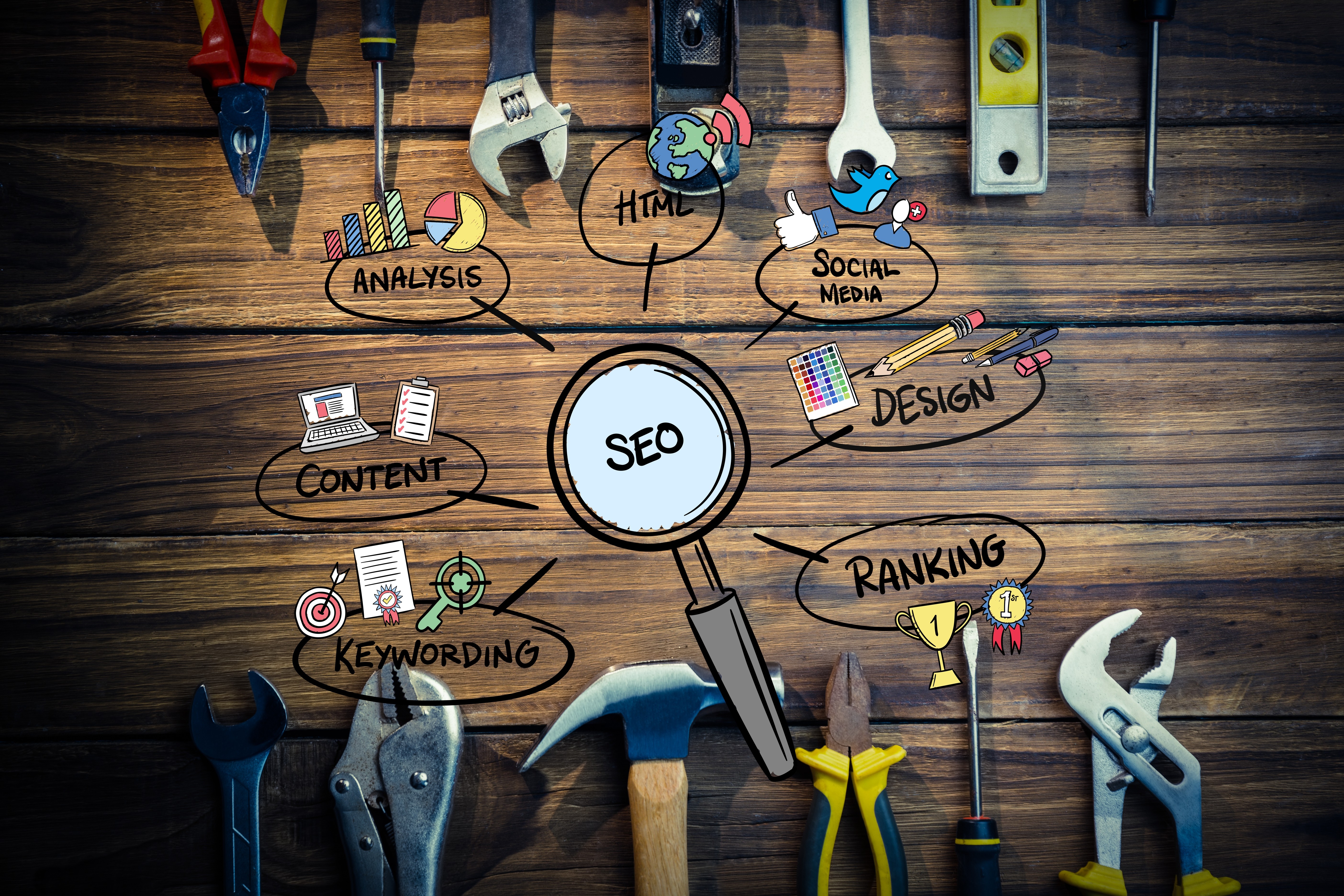
Search engine optimisation is often discussed as though it's a single activity. In reality, it's a combination of different types of work, each targeting different aspects of how Google evaluates and ranks websites.
Understanding the distinction between on page and off page seo factors, and how they interact, is fundamental to building a strategy that produces lasting results.
The Basic Distinction

On-page SEO refers to everything you control directly on your own website: the content you publish, how it's structured, the technical signals embedded in the code, and how your pages are linked together internally.
Off-page SEO refers to everything that happens outside your website that influences how search engines perceive your authority and credibility. The most prominent off-page factor is backlinks (links from other websites to yours), but off-page SEO also encompasses brand mentions, digital PR coverage, social signals, and other external authority indicators.
Google's own Search Essentials documentation makes clear that both dimensions matter. On-page factors help Google understand what your content is about and whether it serves users well. Off-page factors help Google understand how authoritative and trustworthy your website is relative to others covering the same topics.
Neither set of factors can fully compensate for weaknesses in the other. The strongest sites excel at both.
Core On-Page SEO Factors

On-page optimisation encompasses a range of elements, each of which contributes to how well a page performs in search.
Title tags are among the most important on-page signals. The title tag, the text that appears in browser tabs and as the headline in search results, should include the primary keyword for the page and be written in a way that compels clicks whilst accurately representing the content.
Meta descriptions don't directly affect rankings but significantly influence click-through rates. A well-crafted meta description acts as an advertisement for your page in the SERP. Including a call to action, the primary keyword, and a clear value proposition in the allocated 130 to 160 characters is a best practice worth following consistently.
Heading structure (H1, H2, H3 tags) communicates the hierarchy of your content to both users and crawlers. The H1 should include the primary keyword and appear once on the page. Subsequent headings should organise the content logically and incorporate related terms naturally.
Content quality and depth is increasingly the dominant on-page factor as Google's ability to assess genuine usefulness improves. According to HubSpot research, businesses that publish longer, more comprehensive content consistently generate more organic traffic than those producing thin, short-form posts. Depth, accuracy, and genuine helpfulness are the qualities that sustain rankings.
Keyword optimisation means placing your primary keyword in your title, H1, URL, meta description, and naturally throughout the content. Secondary and semantically related terms should appear throughout without being forced. Over-repetition remains a risk; the goal is natural relevance, not mechanical density.
URL structure should be clean, descriptive, and consistent with the page's topic. Short, hyphenated, keyword-containing URLs outperform long, parameter-heavy strings. A URL like /services/on-page-seo-services tells both users and crawlers immediately what the page is about.
Internal linking is one of the most under-utilised on-page levers. Linking from one relevant page to another passes authority and helps crawlers understand the relationships between topics on your site. Pages with strong internal link profiles tend to rank more consistently than orphaned pages. This is covered in depth by Notorio's on-page SEO services, which treat internal linking as a core part of on-page strategy.
Image optimisation involves providing descriptive alt text for all images, compressing files to improve page speed, and using descriptive file names. Alt text also contributes to accessibility, which is increasingly considered in quality assessments.
Page speed and Core Web Vitals are technical on-page factors that directly affect both user experience and rankings. Google's research shows a clear relationship between page load time and bounce rate. Slow pages lose visitors and rankings simultaneously.
Structured data and schema markup help search engines understand specific types of content on your pages, such as reviews, FAQs, products, and events. Correct structured data implementation increases the likelihood of rich results appearing in the SERP, which can significantly improve click-through rates.
Core Off-Page SEO Factors

Off-page SEO is most commonly understood through the lens of backlinks, but the category is broader than links alone.
Backlinks from authoritative domains remain one of Google's most powerful ranking signals. Research by Backlinko analysing over one billion web pages found that the total number of unique referring domains linking to a page is one of the strongest predictors of ranking position. Not all links are equal, however. A single link from a highly authoritative, topically relevant site is worth more than dozens of links from obscure, unrelated domains.
Link quality and relevance matter more than link quantity. A link from a respected industry publication carries far more weight than a link from a low-authority directory. Topical relevance also plays a role: a link from a site covering the same industry as yours sends a stronger relevance signal than a link from an unrelated domain.
Anchor text diversity is an important characteristic of a healthy backlink profile. When many sites link to a page using the same exact-match keyword anchor text, it can appear unnatural. A profile that includes a mix of branded anchors, partial-match anchors, and generic anchors like "click here" or "source" is more likely to reflect genuine editorial linking patterns.
Digital PR and brand mentions contribute to off-page authority both through the backlinks they generate and through the brand signal they create. When reputable publications mention your brand, even without a direct link, it contributes to what Google understands as your entity's prominence in a given topic area.
Local citations are a specific off-page factor for local businesses. Consistent name, address, and phone number (NAP) information across directories, review platforms, and local publications is a ranking signal for local search results. Inconsistencies in citation data can undermine local SEO performance. This is an important consideration for businesses across industries covered by Notorio, from healthcare to financial services.
Reviews and brand reputation signals increasingly factor into how Google assesses the trustworthiness of a business, particularly in YMYL (Your Money or Your Life) categories. Volume, recency, and quality of reviews on platforms like Google Business Profile contribute to both local and general search authority.
Social signals are not direct ranking factors, as Google has confirmed. However, social media activity drives content discovery, which leads to backlinks, which are direct ranking factors. The indirect relationship is meaningful even if the direct one is not.
The Interaction Between On-Page and Off-Page SEO

Understanding on page and off page seo factors individually is useful. Understanding how they interact is where the real strategic insight lies.
A page with exceptional on-page optimisation but no external backlinks will struggle to rank for competitive queries because Google has no external validation of its authority. A page with many strong backlinks but poor on-page optimisation will underperform because Google can't clearly understand what it's about or whether it genuinely serves users.
The most effective SEO strategies address both simultaneously. On-page work ensures that when Google visits your site, it finds content that is comprehensive, well-structured, technically sound, and clearly relevant to target keywords. Off-page work, particularly through link building and digital PR, ensures that external signals confirm the authority of that content.
Together, they create a compounding effect: as your off-page authority grows, your on-page content ranks higher. As it ranks higher and attracts more traffic, it naturally generates more brand awareness and further backlinks.
Technical SEO: The Third Dimension
Alongside on-page and off-page factors, technical SEO forms a critical third dimension. Technical SEO refers to the infrastructure of your website: crawlability, indexability, site speed, mobile-friendliness, security (HTTPS), canonical tags, redirect management, and structured data.
Technical issues don't generate rankings on their own, but they can prevent your on-page and off-page work from translating into results. A site that blocks important pages from being crawled, has slow load times, or serves duplicate content at multiple URLs will underperform regardless of content quality or backlink strength.
A comprehensive SEO audit evaluates all three dimensions, technical, on-page, and off-page, and identifies where the biggest opportunities for improvement lie. For many businesses, technical fixes deliver some of the fastest ranking improvements because they unblock the full value of existing content and authority.
Prioritising On-Page and Off-Page SEO
For businesses starting an SEO strategy, the practical question is often where to begin. A useful framework is to ensure the technical and on-page foundations are solid before investing heavily in off-page authority building.
If your site has significant technical issues or poorly optimised content, backlinks arriving from an off-page campaign will not deliver their full potential value. Fixing the foundations first ensures that every link earned performs at its best.

Once the on-page and technical work is solid, off-page activity through link building and digital PR can compound the gains. The two dimensions then work in their most effective configuration: excellent content that external sites want to reference, earning links that amplify its ranking potential.
If you'd like to understand where your current SEO strategy sits across both dimensions,the Notorio team is ready to help you build a picture of where the biggest opportunities lie.
Want help turning insights like this into enquiries?
A free audit covering your search rankings, technical health, and whether AI tools currently know your clinic exists.